
 21-May--2026
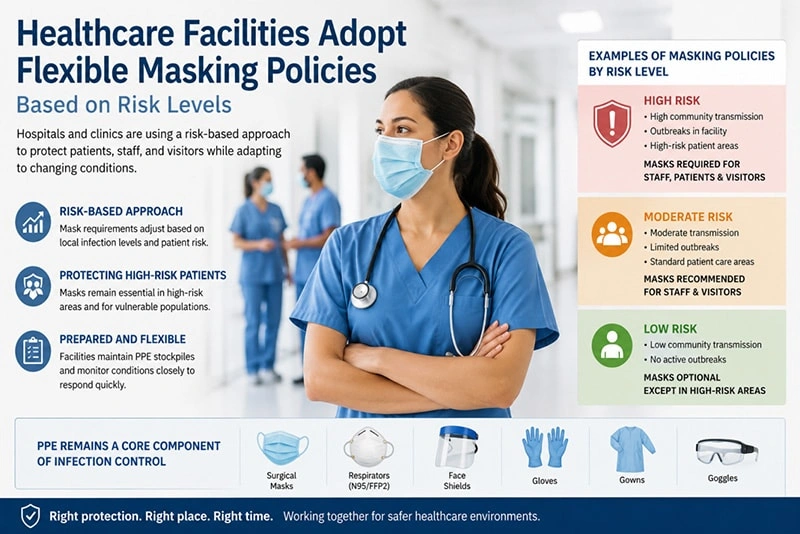
Healthcare facilities around the world are increasingly moving toward flexible masking policies that adjust according to local infection risks rather than maintaining permanent universal requirements. This approach reflects lessons learned from recent public health emergencies and aims to balance patient protection, operational efficiency, and everyday healthcare delivery.
A Shift Toward Risk-Based Protection
During the COVID-19 pandemic, universal masking became a standard infection-control measure across hospitals and clinics. Today, many healthcare providers are adopting a more targeted strategy that responds to seasonal trends, local disease activity, and the vulnerability of patient populations.
Under risk-based policies, mask requirements may be strengthened during periods of increased respiratory illness and relaxed when transmission levels decline. This allows healthcare organizations to maintain preparedness while minimizing unnecessary restrictions.
Protecting High-Risk Patients
Although some facilities have reduced universal masking requirements, many continue to require masks in areas serving vulnerable individuals, including:
● Oncology and cancer treatment centers
● Organ transplant units
● Intensive care departments
● Long-term care and rehabilitation facilities
● Specialized respiratory clinics
Healthcare professionals note that targeted protection remains particularly important for patients with weakened immune systems and chronic medical conditions.
PPE Remains a Core Component of Infection Control
Flexible masking policies do not reduce the importance of personal protective equipment (PPE). Instead, they encourage healthcare facilities to match protective measures to specific exposure risks.
Common protective equipment continues to include:
● Surgical masks
● N95 and FFP2 respirators
● Disposable gloves
● Isolation gowns
● Protective face shields
● Safety goggles
In procedures involving splashes, sprays, or close patient contact, face shields are frequently used alongside masks to provide additional protection for the eyes and face.
Supporting Preparedness Through Stockpiling
Many hospitals have expanded PPE inventory management programs to ensure rapid response capability during seasonal outbreaks or emerging public health events.
Healthcare systems are increasingly investing in:
● Strategic PPE stockpiles
● Automated inventory tracking
● Supplier diversification
● Regional sourcing partnerships
These measures help reduce supply disruptions and improve resilience during periods of increased demand.
The Role of Face Shields
Face shields continue to play an important supporting role in healthcare settings. While they are not intended to replace masks or respirators, they provide valuable protection against droplets, splashes, and fluid exposure.
Disposable face shields are commonly used in:
● Emergency departments
● Diagnostic laboratories
● Dental clinics
● Patient testing centers
● Infection-control procedures
Their lightweight design, full-face coverage, and compatibility with masks make them a practical addition to modern PPE protocols.
Looking Ahead
Healthcare experts expect risk-based masking strategies to become the long-term standard across many healthcare systems. Rather than relying on permanent universal requirements, facilities are increasingly adopting flexible approaches that can be adjusted according to real-world conditions.
As hospitals continue to strengthen preparedness programs and infection-control practices, PPE products—including masks, respirators, and protective face shields—will remain essential tools for safeguarding both healthcare workers and patients.
Suggested headline alternatives:
● Hospitals Embrace Risk-Based Masking Strategies for Enhanced Patient Safety
● Flexible PPE Policies Shape the Future of Healthcare Infection Control
● Healthcare Providers Balance Protection and Practicality Through Adaptive Masking Policies
● How Risk-Based Masking Is Transforming Modern Healthcare Facilities
