

 30-Jan--2026
Disposable face masks are designed to reduce the spread of respiratory droplets released when people talk, cough, or sneeze. They are commonly used in healthcare settings, public transportation, and crowded indoor environments, especially during flu seasons or infectious disease outbreaks.
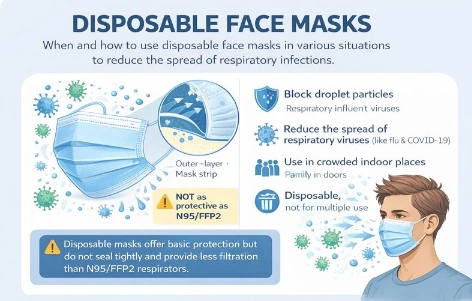
These masks are effective at blocking large droplets and splashes, which are a major route of transmission for many respiratory infections. When worn correctly—covering both the nose and mouth—they can significantly lower the risk of spreading illness to others. For this reason, disposable masks remain widely recommended for people who are sick or caring for vulnerable individuals.
However, disposable masks are not airtight. They do not provide the same level of filtration or face seal as respirators such as N95 or FFP2 masks. This means they offer limited protection against very small airborne particles. In higher-risk environments, health experts often recommend combining disposable masks with additional protective equipment or using higher-grade respirators instead.
Disposable masks are intended for single use. Reusing them can reduce their effectiveness and increase the risk of contamination. Once a mask becomes damp, visibly dirty, or damaged, it should be replaced.
In summary, disposable face masks are a practical and accessible tool for reducing the spread of respiratory infections. While they are not the highest level of personal protection, they play an important role in public health when used properly and in appropriate situations.
