

 02-Feb--2026
Disposable face masks are widely used as a basic form of personal protection in public and medical environments. Their primary function is to reduce the emission of respiratory droplets from the wearer, which helps limit the spread of viruses and bacteria transmitted through close contact.
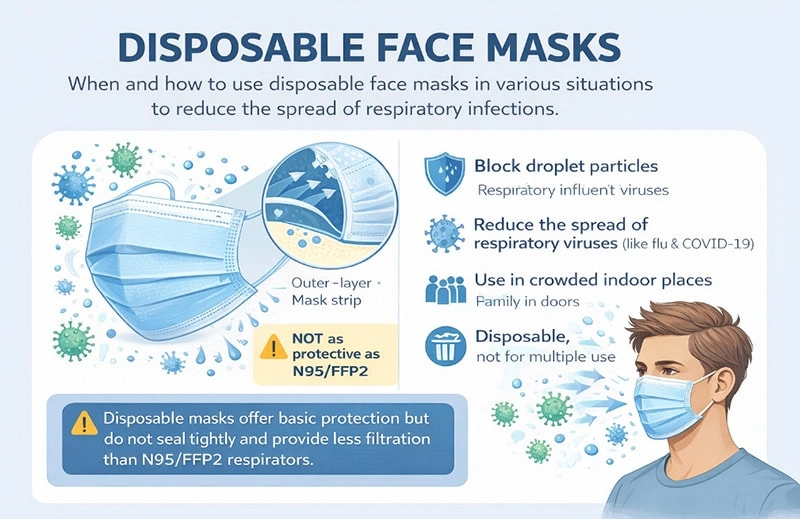
These masks are especially useful in situations where social distancing is difficult, such as public transportation, clinics, airports, and crowded indoor spaces. By acting as a physical barrier, disposable masks help protect others from exposure when the wearer is coughing, sneezing, or speaking.
Most disposable masks are made of multiple layers of non-woven fabric. The middle layer plays a key role in filtering particles, while the outer layer helps repel moisture. Despite this structure, disposable masks do not fit tightly around the face, which limits their ability to filter very small airborne particles.
For this reason, health authorities often recommend higher-grade respirators in high-risk or clinical settings. However, for everyday use and short-term exposure, disposable face masks remain a practical and widely accessible option.
Correct usage is essential. Masks should be worn over both the nose and mouth, handled with clean hands, and discarded after use. Proper disposal helps reduce contamination risks and supports public hygiene efforts.
In everyday public health practice, disposable face masks continue to serve as a simple but effective measure to reduce the spread of respiratory infections when combined with hand hygiene and adequate ventilation.
